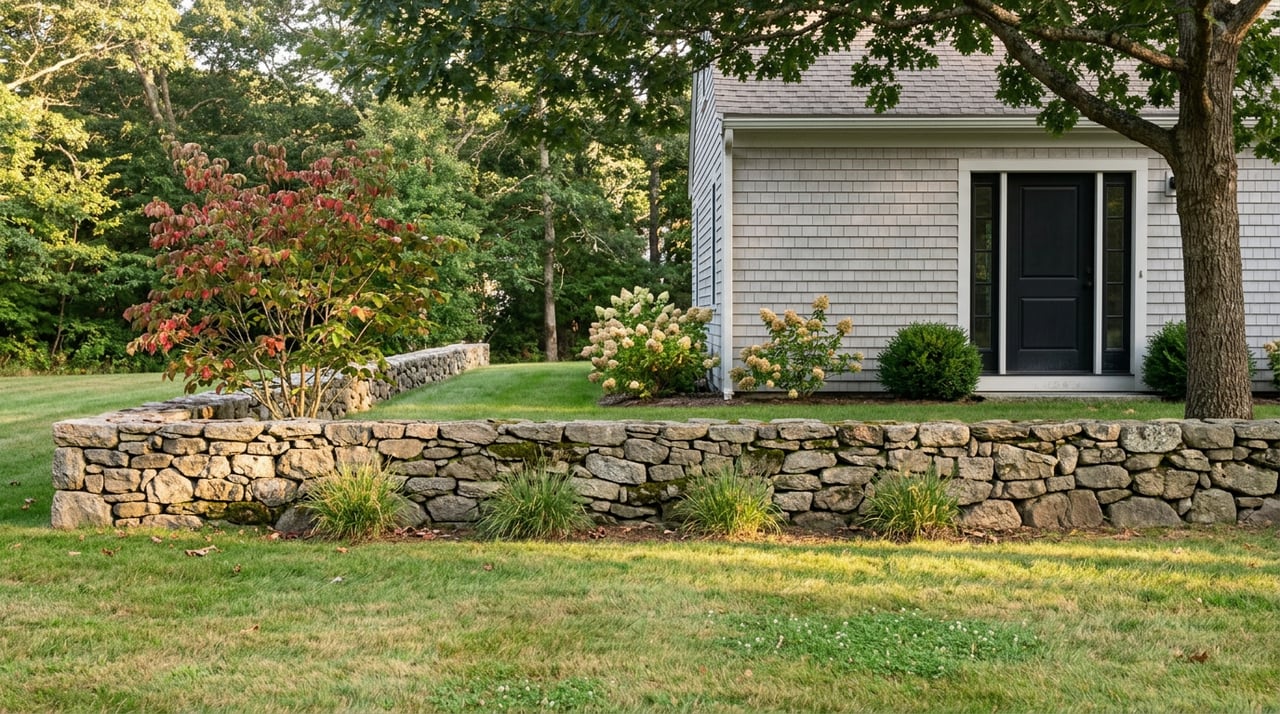
Pull into the gravel lot at 65 Adams Road on a Tuesday afternoon and you will not find a cashier. You will find a covered stand, a cash tin, cartons of eggs, bundles of herbs, and a handwritten sign asking you to leave what you owe. Nobody is watching. Nobody needs to be. That stand belongs to Gilbertie's Organics, and it has worked this way for years.
Most people who move to Easton eventually notice the farm stands. Fewer stop to ask why an unstaffed cash box still works in a county where a locked mailbox often feels optimistic. The answer is not charm. It is a specific, load-bearing piece of how this town functions, and it tells you more about Easton than any list of its farms ever could.
More Farms Than the County Has Room For
Easton describes itself, in its own words, as home to more than twenty working farms, with over a third of its land permanently preserved. In a county where Fairfield's Post Road and Westport's Main Street have spent the last decade filling in every open parcel with retail, that number is not decoration. It is a structural fact with a specific cause.
Much of Easton sits inside the watershed of four reservoirs, and the Aquarion Water Company owns a substantial share of that land and pays more in local taxes than any other landowner in town. Land inside a working watershed is land that is functionally off the table for subdivision. That is not a planning choice Easton renewed every decade. It is a constraint baked into the ground itself, and it is the reason this small town still has active farms on Sport Hill Road, Adams Road, and Center Road instead of the cul-de-sacs that ate similar acreage one town over.
Preserved land does not run itself, though. Someone still has to sell what grows on it, and that is where the honor system comes in.
Two Kinds of Trust on the Same Roads
Not every Easton farm operates the same way, and the difference matters if you actually want to buy something.
Silverman's Farm, the biggest and most visited operation in town, runs a staffed market and a paid petting zoo, the kind of place that draws tri-state license plates every fall weekend. But even Silverman's keeps a piece of its business on the honor system: its farm store sells dairy and meat products seven days a week on an honor basis, according to state officials who toured the farm in 2021 to recognize Easton's farming heritage. Even the farm built for crowds keeps one corner running on trust.
Smaller operations lean on it entirely. Shaggy Coos Farm and Creamery sells its pasteurized milk, gelato, yogurt, and eggs from an honor-system stand with no one stationed there. Sport Hill Farm, a CSA and educational farm at 596 Sport Hill Road, keeps a curated stand open Friday through Sunday where regulars describe it as a place they return to weekly for produce grown without chemicals.
And then there is Sherwood Farm, which puts the whole arrangement in perspective. Sherwood has been farming continuously in Easton since 1713 and is currently on its seventeenth generation. When a farm has operated on the same soil since before the country existed, an honor box is not a quirky throwback. It is simply how the place has always worked.
Sal Gilbertie, who bought his Adams Road property from a dairy-farming family in 1984 and has lived in Easton for more than fifty years, put it plainly when the Aspetuck Land Trust asked him about the arrangement:
"The best thing about living in Easton is the people. There's a peace to Easton. We have this honor system at the farm stand. A lot of out-of-staters come up and don't understand it."
That last sentence is the part worth sitting with. The honor system is not universal etiquette. It is local knowledge, and it fails in a specific, observable way when someone who has not learned the rules shows up expecting a register.
What the Unwritten Rules Actually Are
Talk to anyone who has used these stands for a season and a short list of norms emerges, none of it posted anywhere, all of it assumed:
- Bring the amount posted, in cash or check. Nobody is making change.
- Take only what you are paying for. The tin is not supervised, and the farm is trusting you to self-police.
- Do not expect anyone to bag, weigh, or explain the produce. What you see is what is there.
- If a stand looks picked over, it is not restocked hourly. Come back tomorrow or try a different farm.
- Treat the stand the way you would treat a neighbor's porch, because in practical terms, that is what it is.
None of this is complicated. It is also nothing you would guess correctly on your first visit, which is exactly why the town spends a day every August teaching it on purpose.
The Day the Town Explains Itself
On August 8, 2026, Citizens for Easton held its seventeenth annual Farm Tour, a free, self-guided event that starts at Samuel Staples Elementary School and sends families out across town with a map of participating farms. Recent tour maps have paired working farms with historic sites: Sport Hill Farm, Farm to Heart Farm with its petting zoo, Blue Button Farm demonstrating wool felting and peg-loom weaving, Fishbowl Farm selling seasonal produce and sourdough, Shaggy Coos with its milking herd and calves, Sherwood Farm handing out free ears of corn with a minimum purchase, Silverman's Farm Orchard, Gilbertie's Organics running greenhouse tours, and J&L Orchids opening its greenhouse for a look at how the plants are propagated. The route has also included the Adams Schoolhouse, a circa-1850 schoolhouse, and the Bradley Hubbell Barn, both preserved as working reminders of what agricultural Easton looked like before any of the current farms existed.
The Citizens for Easton Farm Tour is organized every year around the second Saturday of August, rain or shine, with help from the Easton Garden Club, the Easton Community Center, and Aspetuck Land Trust. In recent years, Greiser's Coffee and Market, the town's coffee shop on Center Road, has partnered with the tour by offering a free iced tea to anyone holding a map. None of this is advertised as a lesson in local etiquette. But that is functionally what it is: a single day, every year, where the town walks its newest residents past every honor box in Easton and shows them how the system is supposed to work before they find out the hard way.
What This Means If You Already Live Here
If you have lived in Easton for a while, you already know which stands are staffed and which ones expect exact change in a tin. You know Sport Hill Farm's weekend hours by heart and you know not to show up at Gilbertie's expecting anyone to ring you up. That knowledge is not trivial. It is the same trust that keeps a small, rural-feeling town functioning without turning every transaction into a negotiation, and it is worth noticing precisely because it is easy to take for granted once you have lived here long enough to stop thinking about it.
If a friend or new neighbor is still learning the rules, the Farm Tour map and the town's own list of Easton farms and farm stands are the fastest way to get them oriented before next August rolls around again.
Understanding a town this well, down to the details nobody bothers to write down, is the same instinct that goes into finding the right home in it. If you are curious what your Easton property is worth in the current market or thinking ahead to a move, Elizabeth Casey brings three decades of exactly this kind of local read to the table. Get Your Instant Home Valuation to see where you stand.